

by Victoria Bromley
It’s not often that I’ll read a dystopian or apocalyptic novel, but recently I’ve enjoyed books which are eerie and unsettling with an end-of-the-world inevitability. As a teenager my favourite book was They Both Die at the End by Adam Silvera, so I shouldn’t find it that shocking that I’m drawn to novels set in universes which are doomed.
The past few books I’ve read which I would say come under the sub-genre of an ‘end of the world’ novel are Lost in the Garden by Adam S. Leslie and We are Together Because by Kerry Andrews. I think this style of novel can come in any genre, which is how I’ve found myself accidentally drawn to them. I didn’t realise that We are Together Because became so apocalyptic as I was expecting a beach read about four siblings holidaying in their father’s country house in the south of France, and strange occurrences that would threaten their fun, unaware that the second half of the novel plummeted the characters into a dark and uncertain future where people were disappearing and they had to scavenge for survival. I like being taken by surprise, and this definitely had me reeling.

Effect of the pandemic?
A rise in this style of novel has come about since Covid-19. It’s hard for literature published in the past five years which is set in modern time to not acknowledge the pandemic in some way, or be inspired by it.
We are Together Because mentions how the characters have already survived the pandemic, so the mysterious goings on are not caused by or are an alternative of Covid-19, but something much more deadly and incomprehensible. It’s like a second-wave, as if the pandemic was merely the start of the world’s self-destruction.
Nature fighting back
While many apocalyptic novels explore the taking over of technology and the domination of alien intelligence, We are Together Because looks at nature reclaiming the land as the humans inexplicably disappear. I’m not one for robots or zombies, I’m not really a reader of fantasy, so I think the natural world being the one to push back against human activity is what kept me so enthralled and not disengage from a story which is essentially inexplainable.
Ghosts
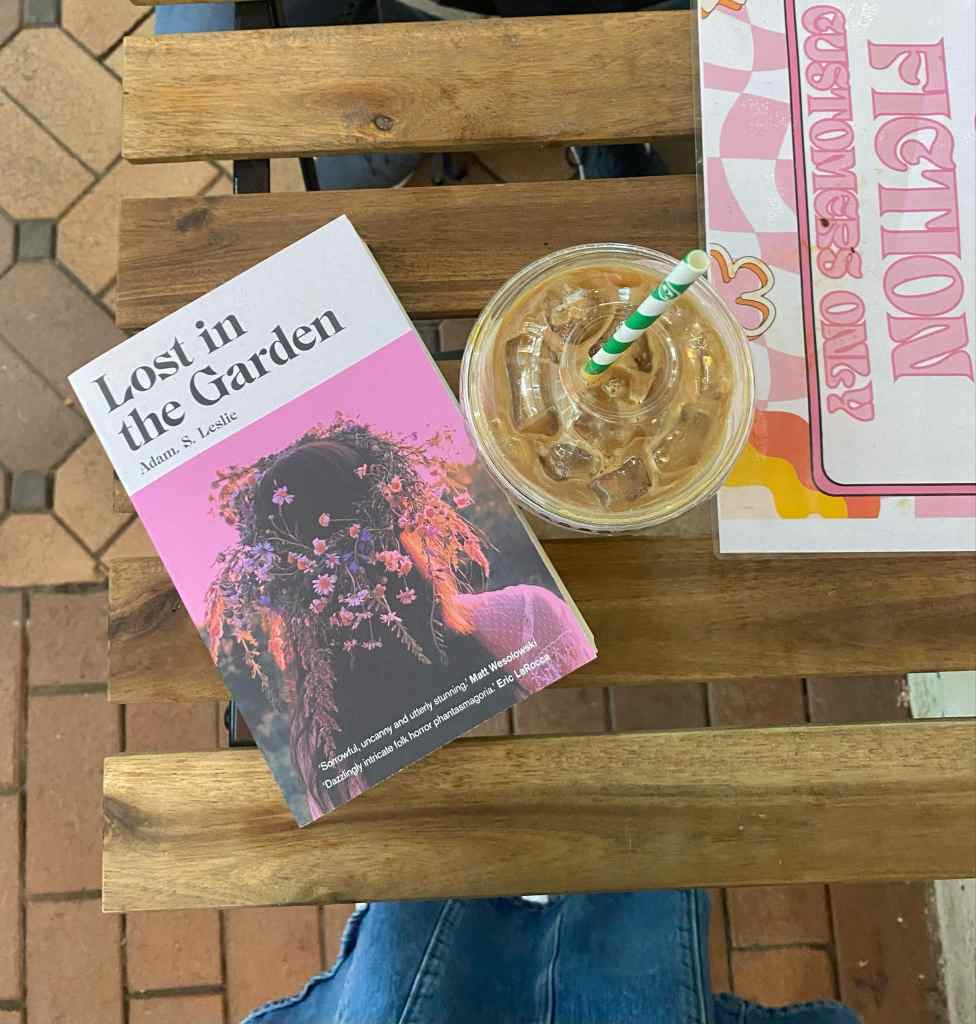
I am a lover of horror, mostly in a literary sense as I’m not good with gore or violence in horror films, and after hearing Adam S. Leslie talk about his debut Lost in the Garden I was desperate to get my hands on it. When I read horror, I’m usually reading short story collections (namely by Bora Chung, Angela Carter or Mariana Enriquez) or anything by Stephen King. I don’t typically go for ghost stories, but Lost in the Garden didn’t seem like a typical ghost story. I loved the hallucinogenic, fever dream nature of the novel, following three girls who take a road trip to Almanby, a place everyone is warned never to go to, all having their own motives to travel into the abyss. As they get nearer, strange things start happening, and they’re absorbed into the place where no one ever returns. All the while, ghosts are wandering the fields.
As a seasonal reader, I often reserve horror stories for the run up to Halloween, but Lost in the Garden is set in the sweltering heat of an endless summer. Even if horror isn’t your go-to genre, it’s definitely worth picking up if you like novels which are uncanny and strange.
Science fiction
Many novels which come under this category are in the sci-fi genre, such as I Who Have Never Known Men by Jacqueline Harpman, Station Eleven by Emily St John Mandel and The Road by Cormac McCarthy. These are often novels which take the world as we know it but it’s been altered into an unimaginable, almost uninhabitable land where characters are forced to survive under barbaric and inhumane circumstances. They often explore how society is warped and reconstructed under such challenges, like the women in I Who Have Never Known Men establishing hierarchies and rules as they build a life to survive in such a barren landscape.
Happy ending?
These novels don’t seem to have a true conclusion as the world perpetually deteriorates and characters are plunged further and further into despair. Usually, I like novels to come to a neat and tidy end where all is explained, but for the end-of-the-world novel the reader is often left in a blackhole, staring blankly at the wall wondering ‘what have I just read?’
 swim press