

by Charlie Fabre
Ever notice how much of Gothic literature is home to female main characters? Whether it’s the young nanny tasked with taking care of creepy children or an old woman lingering (literally) in the attic like a ghost. Female characters have made quite a home in Gothic literature in a way that male characters just haven’t.
Oftentimes featuring haunted houses or haunted grounds, loss of sanity and hysteria, as well as blood and gore; the Gothic genre has widely been accepted as the perfect place to touch on many relevant social issues. I think the Gothic genre is the perfect place to discuss the hardships, horrors, and expectations of womanhood.
The Haunted House
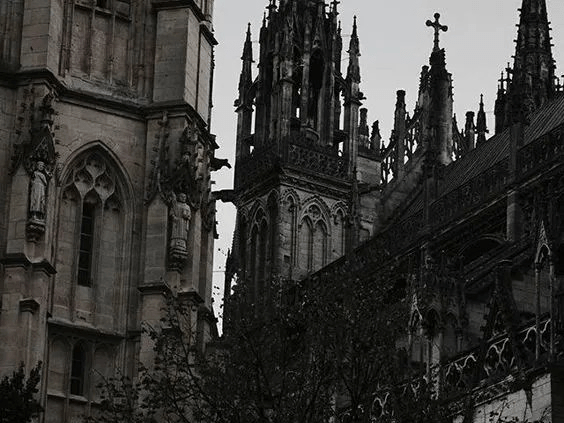
Haunted houses are great as they often become a character of their own. Think of Hill House in Shirley Jackson’s iconic novel The Haunting of Hill House, or the The Overlook hotel in Stephen King’s The Shining. These places trap their guests and fuel them with madness – it’s like a kind of cabin fever that the house itself creates.
The haunted house, for women, is the symbol of looming domesticity which was especially significant between the 1800s and mid-90s when many iconic Gothic texts were penned. Locked up in homes, forced into maintenance and upkeep: cooking, cleaning, entertaining, etc. It’s no wonder that this atmosphere would start to become suffocating.
The house and the home is the social status of the man, and yet it is women who run it entirely – someone must always be in the kitchen preparing dinner, someone must always be warming the coals of the hearth for warmth – and she is the one who suffers most from it. Consider the Lady in the Lake from Mike Flanagan’s hit-show The Haunting of Bly Manor, loosely adapted from Henry James’ novella The Turning of the Screw. The Lady in the Lake, at first a woman named Viola, was the lady of the mansion – it was her who ran it and who owned it it seemed. But upon her death, another woman took over, ushering Viola and her own significance to the home, out. Viola now haunts Bly Manor and the grounds in anger at her easy quick dismissal. All the work put into maintaining this home and she is so swiftly replaced. And, as happens so often in Gothic literature, the house then becomes a cage for her; she is held captive by the lake and can only be freed by passing ‘the curse’ onwards.
The tragedy here is in this need to pass off the cage – one must always inhabit the cage, and it is only ever women who do. In trying to free themselves, women must take down other women. This theme is a sad truth as seen in instances like The Salem Witch Trials – and subsequently Arthur Miller’s brilliant play The Crucible – as well as in, to a lesser or more subtle extent, Jane Eyre.
The Creepy Child

Working as a nice accessory to the haunted house is the creepy child. One element of domesticity is of course the task of child-bearing and child-rearing, which once again fall onto women. The child in horror and Gothic literature is a perfect instrument to showcasing many internal struggles, just like the haunted house, but in a form that’s much more tangible and perhaps more relatable.
The child is, after all, physically and directly related to the mother: it is her progeny, it comes from her in the most literal senses. And in this sense, the child is used as a mirror reflecting the mother’s insides on the outside: her flaws and shortcomings. An unruly child is the result of a mother who cannot take care of it. A possessed child is the result of a mother who is mentally unwell, passing this unwellness down the generational line.
It doesn’t always have to be the mother though. As mentioned before, it is quite often a female nanny – as seen in The Turning of the Screw or in the 2001 film The Others. These nannies are tasked with taking care of young children in the absence of their parents, and generally they fill many other domestic roles as well. Of course, once the horrors begin the children act out and the nanny is put to blame. She is not up to scratch for the job, she can’t handle someone else’s children, how will she handle her own?
The creepy child in literature represents the intense and immense pressure that is placed upon women and mothers when it comes to child-rearing duties. No crueler example of this exists than in Rosemary’s Baby.
The Body, Blood, and Gore

This one I find interesting as it can be viewed in multiple ways. If this essay were discussing horror I would go into a spiel about the excessive and gratuitous use of violence against women in film. But Gothic is a little more subtle than horror, though they do share elements, and Gothic doesn’t shy away from gore now and again.
I think what concerns women and what concerns Gothic, and that which unites them, is the body. The body as an unstable place to live in, the body as something that one cannot control, that one can feel trapped in. An excellent example of this is Janet Frames’ semi-autobiographical novel Faces in the Water in which a woman suffering from Schizophrenia is treated in a psychiatric hospital which feels as though it has taken her hostage. In this, the body and the mind is a cage, but from an outside point of view, the hysteria the main character is subject to is a common symptom of womanhood, so there is nothing to do.
What strikes me is that so often blood and gore are used as instruments of shock and fear, and yet women are subjected to blood every month of their lives. In the time of a woman’s period she is faced, quite literally, with the shedding of her insides and the bloody remains. This time of gore becomes routine and banal, it doesn’t shock us anymore than a bead of blood from a paper cut would shock us. And yet in the Gothic genre it is made into this immense thing of horror, even though blood is the lifeforce from which we all live and breathe.
It is interesting to note that the blood of menstruation and childbirth is recoiled from, but the blood of a virgin, suckled on by a looming vampire, is seen as erotic. There are different connotations given to different types of blood, once again dividing women into two beings: the body, the function which is not to be spoken of, and the sensual, frail, and desired.
The Ghost of the Woman

The ghost represents an after-math, in my opinion, and a lingering guilt or sense of wrong-doing. Many ghosts are trapped in their houses, many ghosts represent trauma or the inevitability of hardship and fate.
Take the Bent-Neck Lady in Mike Flanagan’s series The Haunting of Hill House (can you tell I’m a Flanagan fan?). Orchestrated by the house, the Bent-Neck Lady is a symbol of Nell’s inescapable fate – no matter what she does she is tied to Hill House, their strings of life are irrevocably intertwined and one way or another she will find herself here, eternally.
This represents a woman’s lack of agency imposed on her by the marital constraints of the mid-90s and the basic human rights she is still lacking at this time. Daphne DuMaurier’s classic novel Rebecca is a great representation of this, as well as the first point about domesticity. The unnamed narrator is haunted by the late eponymous Rebecca and cannot shake her presence which represents her tragic fate and the guilt of Manderly’s guilt at it. Even in death, the woman holds onto the emotional burdens of others and cannot be released from them.
Furthermore, the ghost is a memory and it is a rage. Helen Oyeyemi’s brilliant novel White is for Witching presents this perfectly with a house haunted by a malevolent something (thought to be an Obeah witch) that wishes to do harm to the house’s inhabitants. In my personal reading of White is for Witching I understood this spirit to be a representation of the lasting trauma felt by many individuals from colonized nations, something that Wide Sargasso Sea touches on as well, and it once again falls on a woman’s shoulders to bear this weight.
Overall the Gothic genre is a brilliant and diverse tool that can be used to discuss many long standing social issues and trauma of varying degrees. It’s one of my favorite ways to write about personal hardships and one of my favorite ways to read about other hardships.
 swim press