
by Trina Read
Editor and issue designer Trina breaks down how each magazine gets from an idea to print.
When we started Swim Press, I had no idea how to put together a magazine so I had to learn how to use Adobe InDesign to create a perfect printed mag.
In this blog, I will be walking you through the steps I take when putting Swim Press together from choosing a colour for the cover page, to getting it ready for print.
1. Designing the front page
Choosing a colour for the front page is super important as it creates the brand for the issue. You want to be able to establish an aesthetic that matches the theme of the issue. For example with Flora & Fauna, we were creating a sense of the natural environment which meant using greens/brown/pink. I usually find some colours at Pantone and then match these with our potential cover images.
Sometimes we will come up with about 10 different variations of the cover design before deciding on the right one. My best advice is to have lots of options, to really gauge what it is you want and what will fit best!

2. Putting the pieces in order
This is the tricky bit. Swim Press accepts poetry and prose, so the lengths of our accepted pieces is usually really varied. I usually try and get a mixture of shorter pieces next to the longer ones to break it up a bit and keep the pacing good.
We had lots of photography and artwork for Flora & Fauna, so fitting in the images was one of the biggest tasks but this also helps to break up the issue. I try to match the image with the piece as much as possible.
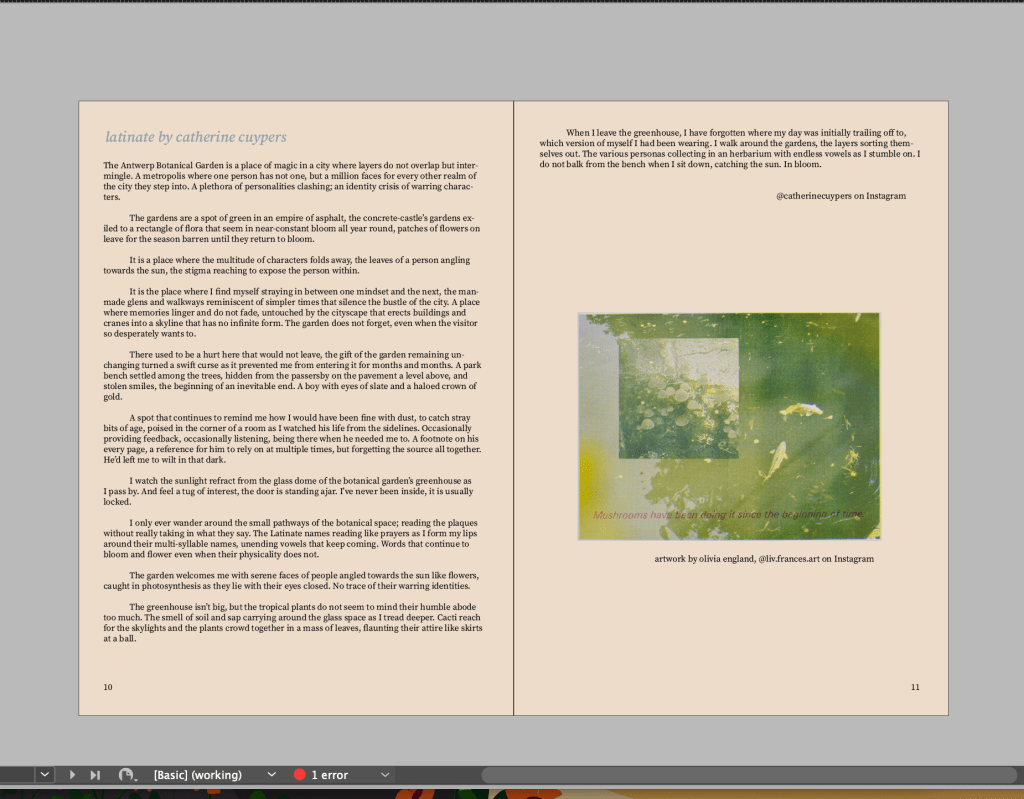
Putting your screen mode into preview mode helps you to see what the magazine will look like when printed. I try to fill blank space as much as possible; as with this example, I placed the artwork towards the bottom middle of the page in order to fill the space.
3. Key features
Some key features to include in the magazine are: editor’s note, contents page, page numbers, consistent formatting.
An editor’s note is a great feature to include in your magazine so that you can engage with your readers and give them a taste of what’s to come in the issue, as well as thanking your audience for their support, and offering a line or two on what your journal aims to achieve for any newcomers!
A contents page is also important as this gives readers an easy overview of all the pieces in the magazines. This also makes writers happy as they’ll be able to quickly spot where their piece is – always an exciting moment.

A contents page would not be complete without page numbers. It sounds simple but numbering your pages accurately helps it all come together, but make sure to check over the page numbers with those on the contents page – things can change up as you’re formatting so frequent consistency checks are a must.
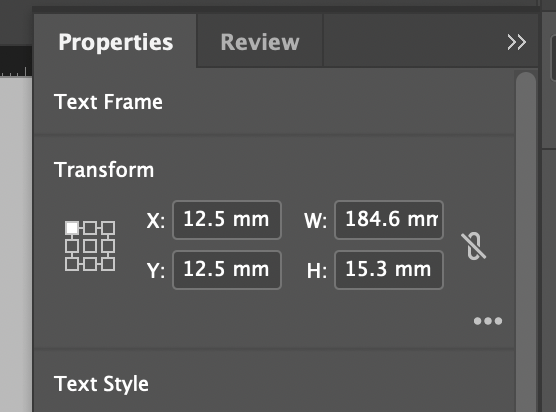
Finally, keep your formatting consistent by making use of the measuring features on InDesign. Small attention to detail like this is what helps your magazine look professional and polished.
Consistency on all bases is important like with fonts, font sizes, margins, etc.
4. Proofreading
I cannot stress enough how crucial proofreading is. However many times you check over something, mistakes can still be made. At Swim Press we each check over the whole issue more than one time.
When you see something so many times it can be hard to spot the smallest of mistakes, so make sure you get someone else in your team to check over your work – or even someone completely detached from it.
5. Printing
Once you are completely happy with the magazine and layout, it’s time to get it printed. We print our magazine on A4 glossy paper 150gsm silk. Each magazine needs to be in multiples of 4 for printing which is something to consider when putting the issue together.
Occasionally it just works out perfectly but sometimes this means reshuffling the issue to get the right page count. Asking for a proof copy of the issue before you go ahead and print is super important for final checks, especially if it’s your first time. Print looks a lot different to a laptop screen so make sure you are happy before spending all that money!
Hopefully this little guide was helpful, and if you have any questions please don’t hesitate to reach out! We’re always happy to help.
Putting together a magazine from scratch can be a challenge but it’s an excellent way to learn new skills and make a difference to new and emerging writers and creatives.
 swim press