
by Trina Read
I have recently started studying for a Masters in Songwriting at the Institute of Contemporary Music in Performance so I thought it would be interesting to talk a bit about the process of songwriting and its benefits.
I studied English Literature and Creative Writing at university but for me I never felt like the nail of my creativity had really been hit on the head until I discovered songwriting. I believe that many people have the ability to write songs but lack the self-belief to do so. We are surrounded by songs every day so it can be a daunting thought that we ourselves could be the creator of such a thing. Although there can be so many complexities to songwriting when you start talking about production and instruments and all that, when it comes down to it you don’t need much else than a pen and paper and a melody.
When I saw that it was possible to study the art of songwriting through a well-placed Facebook advert, I felt like something clicked and that this was the form that my creative abilities should take. And I didn’t need to be Elton John to do it. The only person telling you not to create at the end of the day is yourself. Therefore, the only person who can tell you to create is you. Once I realised this, I started finishing songs rather than leaving chaotic unlabelled voice notes on my phone and let me tell you: there is nothing more therapeutic than writing a song. If you create in any way you will understand the catharsis you can get from creating art. For me, I felt like my songs could communicate better than my writing ever had. I found new ways to explore emotions and feelings. This is something which inspires me most when listening to my favourite musicians as well: the ability to communicate a feeling that is so universal but feels so personal.

This is just how I go about writing a song. Usually, I sit down to write a song after I have a thought that I know I want to write about – this usually happens when I’m having a dramatic moment or you could call it ‘divine inspiration’. I mainly tend to write emotional lyrical songs (blame the English Literature student in me) so I’ll sit down at the piano or with my guitar and whip out the voice recording app on my phone and start playing around with chords. Sometimes I’ll have snippets of lyrics in my mind that I know I want to include, sometimes I’ll have no idea. After I have some chords, I start recording myself and whatever words come out because you’d be surprised what can come out of apparently nowhere and actually sound coherent! This is why I think just writing a lot of stream-of-consciousness or keeping a diary is a good practice (one I am trying to keep up with more) as it allows you to constantly feel in a creative headspace. Something we have been advised to do on our course is do ‘morning pages,’ which Julia Cameron outlines in her book The Artist’s Way. This practice involves writing 3 sides of A4 each morning, purely stream of consciousness, with the aim of improving productivity and creativity.
Now, I could easily make this blog post incredibly long but I am going to wrap it up with saying that there are so many paths you can take as a creative – the most important thing is to be open to hearing what your creativity wants and to exploring different avenues; for example, if you are typically a short story writer, maybe try your hand at poetry. Lastly, being a creative is so fun, not everyone gets to be a creative and that must suck, enjoy it!
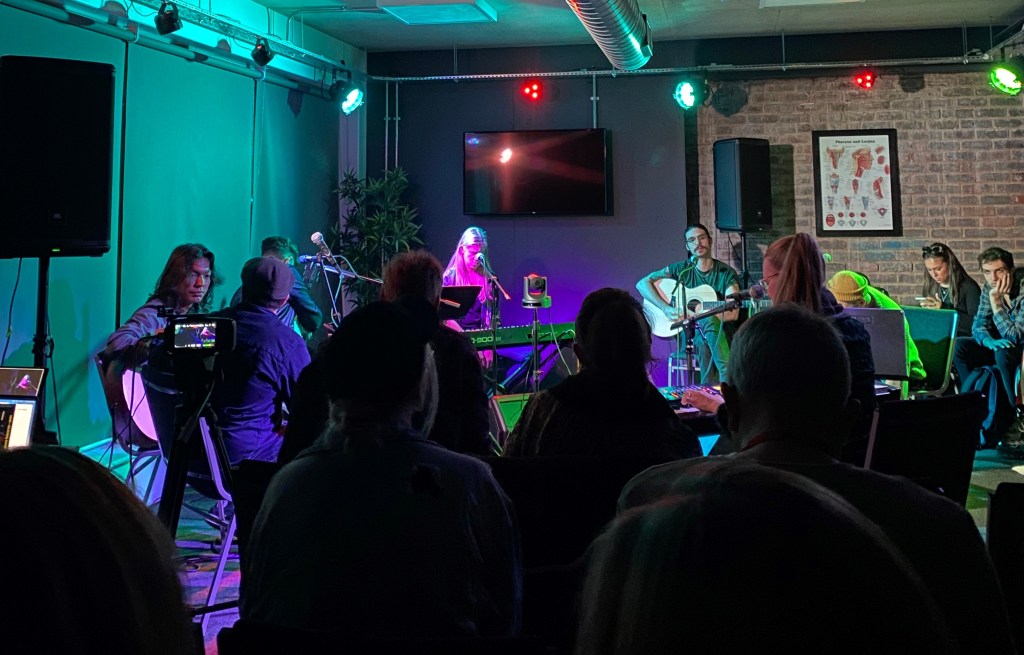
Here is a reading list of books that we have been recommended to read that I have found inspiring so far. These books are useful for pretty much any creative!
The Artist’s Way, Julia Cameron
The War of Art, Steven Pressfield
Big Magic, Elizabeth Gilbert
I’ll end with one of my favourite quotes from The War of Art by Steven Pressfield: “Creative work is not a selfish act or a bid for attention on the part of the actor. It is a gift to the world and every being in it. Don’t cheat us of your contribution. Give us what you’ve got.”
 swim press